Why PQ? Because the Brain Starts in the Body
Why do we need another acronym for health and well-being? We already have IQ and EQ. So, what is PQ?
PQ stands for physical intelligence. It is the connection between the body and brain through the nervous system and the senses. Before a child can think clearly or manage emotions, that system must be organized.
This matters more than ever. Talk to any teacher or school administrator and you will hear the same thing. More kids are struggling with focus, behavior, and learning. These are not just classroom problems. They are signals that something foundational may be missing early on.
PQ helps connect dots that we have been treating as separate. It brings together what we know about movement, brain development, and behavior, and gives us a clearer picture of why some children struggle and what we can do about it.
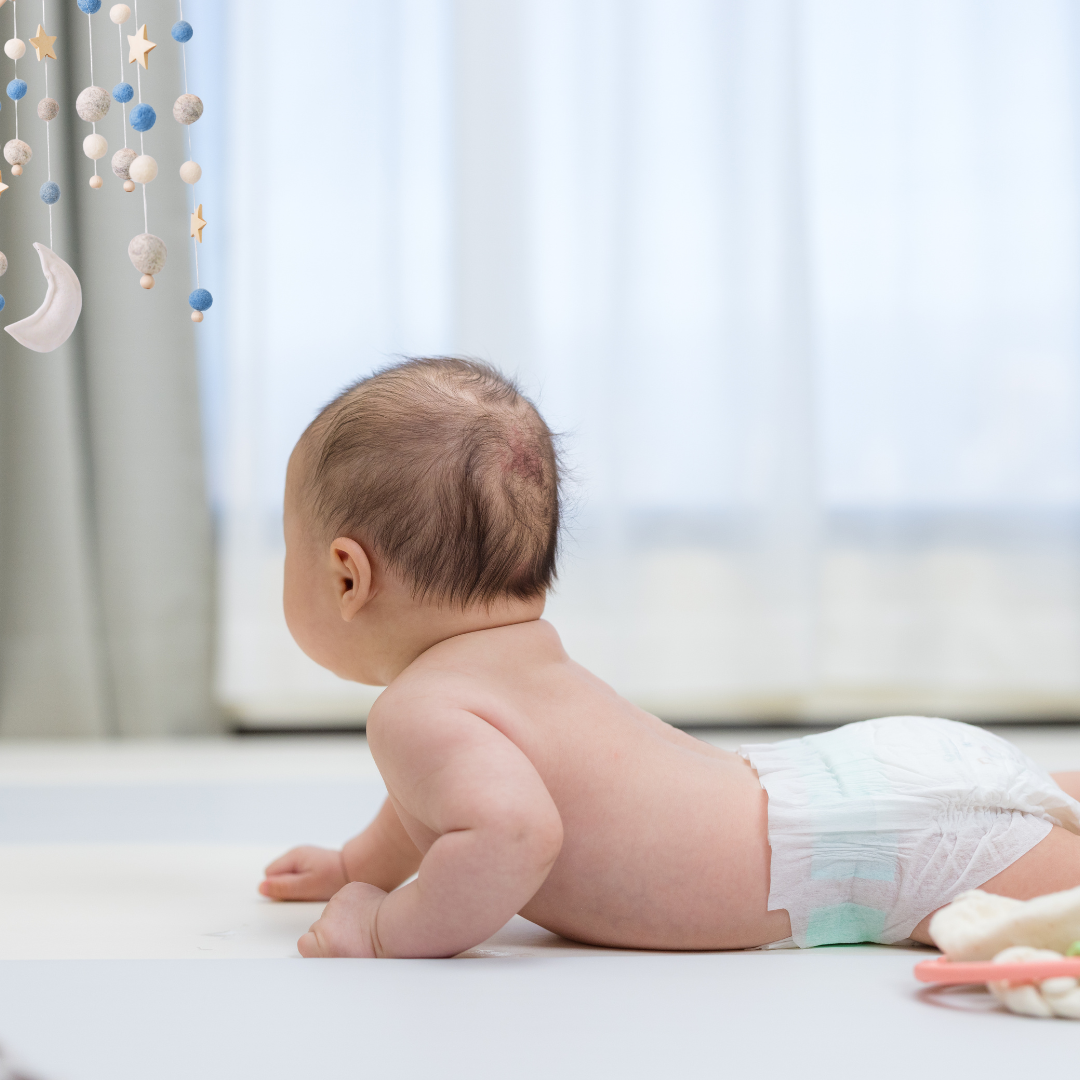
One of the biggest gaps today is between what we recommend and what we fully understand. Health organizations like the CDC and the American Academy of Pediatrics recommend daily “tummy time,” or supervised time on an infant’s stomach while awake. Over time, this builds to about 30 to 60 minutes a day (American Academy of Pediatrics, 2020).
These guidelines focus on physical benefits. Babies build stronger neck and shoulder muscles. They improve motor skills. They reduce the risk of flat head syndrome. Without it, babies may experience delayed motor milestones, weaker posture, or uneven development.
All of that is true. But it is only part of the story.
Early movement is not just about muscles. It is one of the main ways babies learn about the world. When a baby pushes up, turns their head, or shifts their weight, they are doing more than moving. They are learning how their body works, building awareness, and organizing their nervous system. Research in developmental neuroscience shows that these early sensorimotor experiences play a critical role in shaping brain architecture and later cognitive and emotional function (Center on the Developing Child, Harvard University, 2016).
Tummy time takes effort. It requires coordination. It asks the baby to respond to gravity and their environment in increasingly intentional ways. These early experiences help build the foundation for skills like focus, emotional control, and resilience later on.
Under the surface, these movements are engaging brain systems involved in coordination, balance, and early self-regulation, including connections between the cerebellum and developing frontal networks. As these systems work together, they strengthen neural connections that support how we pay attention, manage emotions, and respond to challenges over time.
In simple terms, movement helps build the brain.
This is where PQ comes in. It helps us see that early movement is not just a milestone. It is a foundation for how children think, feel, and behave over time.
The good news is this is an opportunity hiding in plain sight. We already recommend these simple practices. They are low cost and available to everyone. This is not a new program. It is a shift in how we begin to prioritize what we already know.
By building these practices into parenting support, childcare, and early learning, we can help more children start strong.
Instead of trying to fix problems later, we can build better outcomes from the beginning.
References
American Academy of Pediatrics. (2020). Back to sleep, tummy to play.
Center on the Developing Child at Harvard University. (2016). From best practices to breakthrough impacts: A science-based approach to building a more promising future for young children and families.
Join the Movement
updates, activities, and info.