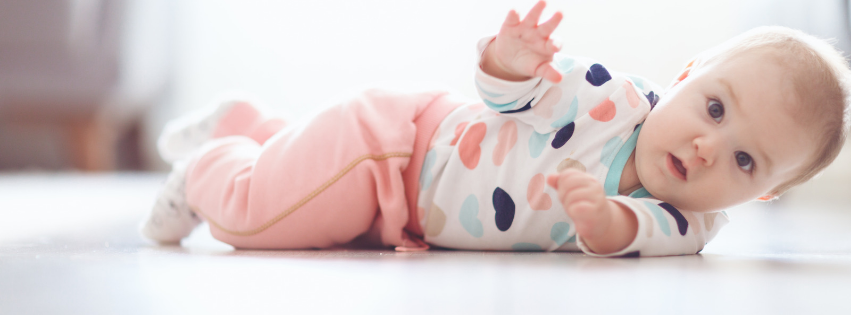
The development of our nervous system, the vast network responsible for sending and receiving messages between the body and brain, is integrally tied to movement and our sensory systems. Long before a child can understand language or make sense of the world intellectually, the body is gathering information and sending it to the brain.
We are most familiar with the five senses of touch, taste, sight, sound and smell. These make up the exteroceptive system, bringing information from outside the body into the brain. Touch something hot and the nervous system rapidly processes that information and tells you to pull your hand away.
But we also have sensory systems gathering information from inside the body. Proprioception tells us where our body is in space. The vestibular system, located within the inner ear, contributes to balance, posture and coordination of our eyes and body. Interoception gathers information from inside the body, including signals related to hunger, breathing and other internal functions. It also contributes to our awareness of physical sensations tied to emotions, such as butterflies in our stomach when we are nervous or tension in our muscles when we are upset.
Together, these systems continually provide the brain with information about what is happening both inside and outside our body.
Nervous System Regulation Through Movement
Movement stimulates these sensory systems. This begins before birth as a baby moves within the womb and continues rapidly once the baby enters the world. Research on early motor development describes this relationship as a coupling between sensory and motor systems, with movement-generated information helping shape the developing nervous system.
- An infant pushing against gravity, turning its head, reaching, rolling and eventually crawling integrates primitive reflexes.
- Pressure through joints stimulates proprioception.
- Changes in head position stimulate the vestibular system.
- Touch, sound, sight, taste and smell provide information about the external environment.
Over time, the neurological foundations being built through these early experiences will support much more complex activities. Reading, for example, requires coordinated eye movements and the integration of visual information across the two hemispheres of the brain. Writing similarly depends on the integration of visual, proprioceptive and motor information.
These capacities are being developed long before a child ever sits at a desk.
The Importance of Safety
The nervous system is not developing in isolation. It is developing within an environment, and one of the most important pieces of information it is continually gathering is whether that environment is safe.
A nurturing environment provides repeated signals of safety. When a baby cries and someone responds, when they are held, rocked, fed and comforted, their nervous system is learning something about the world and their place within it. Conversely, chronic stress and trauma can disrupt healthy development and contribute to patterns of dysregulation that may persist much later in life.
Physical Intelligence Begins Early
This is central to the concept of Physical Intelligence (PQ). The body is not simply carrying the brain around while the brain learns. The body is actively participating in building the neurological architecture that makes learning, regulation and coordinated behavior possible.
Movement gives the developing brain information. Sensory experiences help organize that information. Safe relationships create the conditions in which those systems can develop and integrate.
Long before children learn to read, write, reason or regulate their behavior, they are learning through their bodies. If we want to better understand how human beings learn and develop, we must begin here. And if we want to see improvements in education and mental health outcomes, we must promote developmentally appropriate movement during the earliest stages of life.
References
Božanić Urbančič, N., Battelino, S., & Vozel, D. (2024). Appropriate vestibular stimulation in children and adolescents: A prerequisite for normal cognitive, motor development and bodily homeostasis: A review. Children, 11(1), 2. PubMed Central (PMC)
Center on the Developing Child at Harvard University. (n.d.). Key concepts in early childhood development. Harvard Center on Developing Child
Dusing, S. C. (2016). Postural variability and sensorimotor development in infancy. Developmental Medicine & Child Neurology, 58(Suppl. 4), 17–21. PubMed
Hadders-Algra, M. (2018). Early human motor development: From variation to the ability to vary and adapt. Neuroscience & Biobehavioral Reviews, 90, 411–427. PubMed
Maguire, J. (2024). The Nervous System Reset: Heal trauma, resolve chronic stress and pain, and regulate your emotions with the power of the vagus nerve. Atria Books.
Yeatman, J. D., Dougherty, R. F., Ben-Shachar, M., & Wandell, B. A. (2012). Development of white matter and reading skills. Proceedings of the National Academy of Sciences, 109(44), E3045–E3053. The broader review of the biological development of reading circuits discusses the posterior corpus callosum and interhemispheric pathways in reading development. PubMed Central (PMC)
Join the Movement
updates, activities, and info.