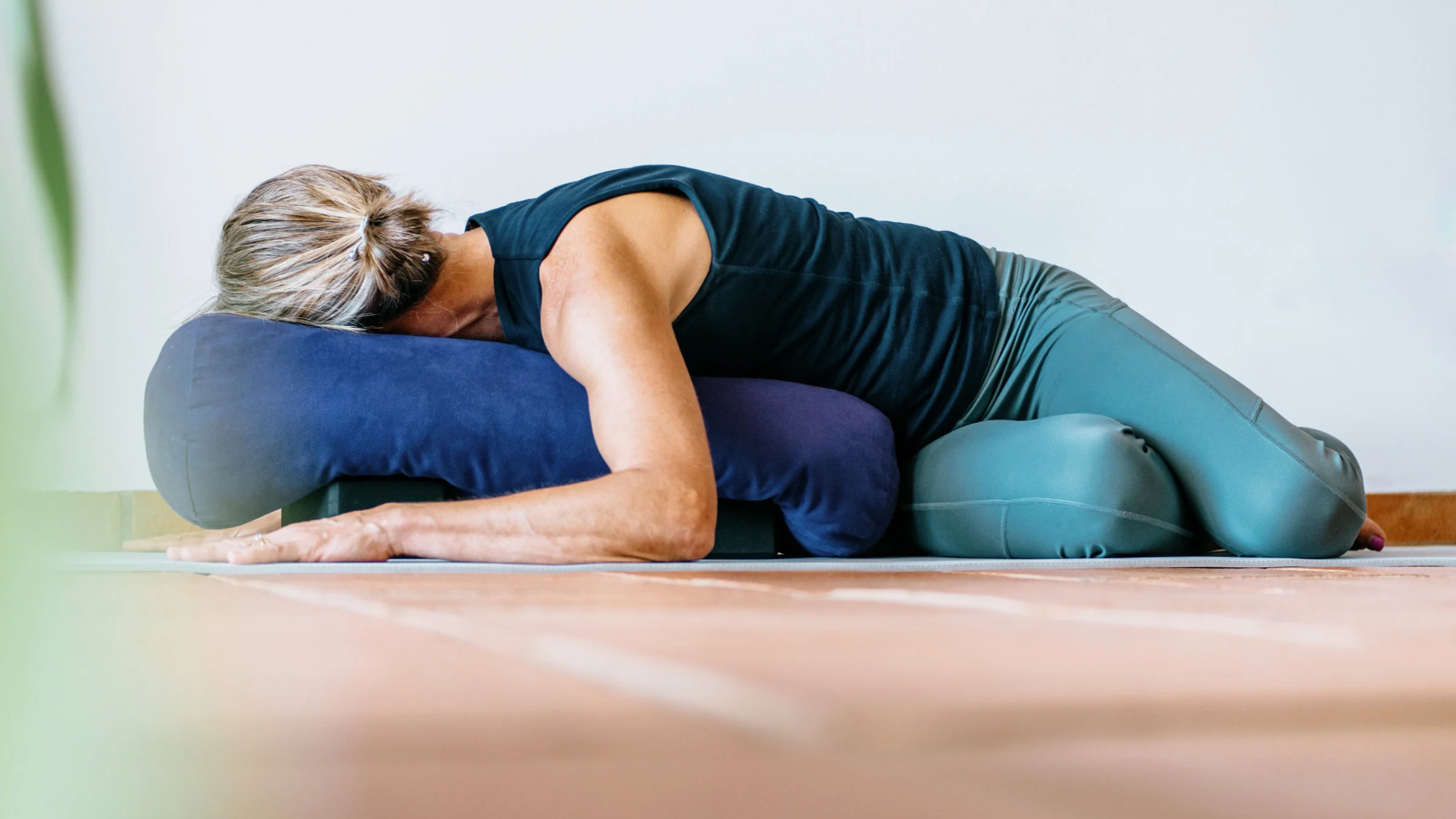
Slow Down. Tune In. Feel Better.
"I'll have what she's having." I love this quote from the movie When Harry Met Sally. I use it often to describe that feel-good feeling we get when we do something healthy. It's not just the mental belief that we've done something productive. The body generates feelings of satisfaction that create an internal sense of reward. This is a good thing because it contributes to intrinsic motivation, the desire to keep doing the thing that feels so good.
A few years into my Yoga practice, I was introduced to Yin Yoga, a gentle, accessible form of yoga that combines supported postures with extended periods of mindful breathing and stillness. Unlike more active forms of yoga that focus on muscular strength and movement, Yin Yoga emphasizes relaxing the muscles (and the mind), to focus softening and stretching of surrounding connective tissues, including fascia.
Postures are typically held for three to five minutes. This allows more time to release unnecessary tension, increase awareness of physical sensations, and helps calm the nervous system. No previous yoga experience or special flexibility is required. Through extensive use of props, the body is positioned to relax comfortably in each pose.
In both practicing and teaching this style of yoga, I can say that the more difficult part of the practice is in holding the posture for so long. Rarely in modern life do we do nothing for five whole minutes. The "stretch" is as much for the mind as it is for the body tissues targeted in each pose.
The resulting benefits to both the body and the mind can be extraordinary.
Feel-Good Chemicals and the Brain
Many people describe how good they feel after exercise. This is a welcome benefit and motivator for most of us. We've all heard of the runner's high, that euphoric feeling sometimes experienced during or after sustained exercise. While endorphins have traditionally received much of the credit, research now points to endocannabinoids as important contributors as well.
What people might not know about is the "high" people can experience after a mind-body practice. There may be some interesting physiological mechanisms behind this, too.
Yoga, meditation, and other forms of exercise can influence the body's natural chemical systems that regulate mood, stress, pain, and relaxation.
- Serotonin: Helps regulate mood, emotional balance, and overall well-being.
- Dopamine: Supports motivation, pleasure, satisfaction, and feelings of reward.
- Oxytocin: Supports sense of connection, trust, and safety.
- Endorphins: The body's natural pain-relieving chemicals that can contribute to feelings of pleasure and comfort.
- Endocannabinoids: Naturally occurring compounds, including anandamide, that help regulate pain, stress, and mood.
- GABA: A calming neurotransmitter that reduces “mental chatter” and supports relaxation.
- Melatonin: Helps regulate healthy sleep and wake cycles.
Not all of these are hormones, and research has not established that Yin Yoga directly increases each of them. However, studies of yoga, meditation, and exercise suggest that these practices influence the body’s chemical systems associated with feeling soooo good.
Benefits for Body and Mind
Stress Reduction
Slow breathing and sustained, comfortable postures are shown to help reduce the body's stress response and encourage parasympathetic nervous system activity, supporting rest and recovery. With regular practice, these techniques can help us shift out of chronic fight-or-flight activation toward a greater capacity for rest-digest activity.
A 2018 randomized controlled trial involving 105 adults found that five weeks of Yin Yoga practice reduced anxiety, sleep problems, and levels of adrenomedullin, a biological marker associated with physiological stress. These findings offer some promising evidence that the benefits of Yin Yoga extend beyond simply feeling relaxed.
Flexibility & Mobility
Long holds with minimal muscular effort allow awareness and intention to shift to the supporting actors - the fascia, tendons, ligaments, and joint structures that support our musculoskeletal system. We tend to focus on muscle strength, length, and function when considering optimal body mechanics. However, muscles work in concert with the connective tissues and joints that support and guide their movement.
Proprioceptors in muscles, tendons, and joint tissues play a significant role in our sense of spatial awareness and coordination. Gentle stretching can improve flexibility and range of motion, while the mindful attention practiced in Yin Yoga offers an opportunity to become more aware of how our bodies are positioned and moving.
Emotional Regulation
Practicing stillness while noticing sensations and emotions creates opportunities to respond with greater awareness rather than reacting automatically. When we begin to notice sensations in the body, we may become more aware of emotional triggers, where we are holding tension in the body, and how these patterns might be creating undesired feedback loops. Yin Yoga gives us an opportunity to recognize these patterns and practice responding differently.
More Than Stretching
Time spent in quiet awareness provides an opportunity to reduce distractions, settle racing thoughts, and cultivate a greater sense of presence. Yin Yoga offers an opportunity to reconnect with the body and recognize how physical sensations, thoughts, and emotions influence one another.
Through gentle stretching, stillness, and awareness, we can tap into our body's own natural pharmaceutical treasure trove for improving physical comfort, emotional balance, and overall well-being.
Scientific References
Daukantaitė, D., et al. (2018). Five-week yin yoga-based interventions decreased plasma adrenomedullin and increased psychological health in stressed adults: A randomized controlled trial. PLOS ONE, 13(7), e0200518.
Streeter, C. C., et al. (2007). Yoga asana sessions increase brain GABA levels: A pilot study. Journal of Alternative and Complementary Medicine, 13(4), 419–426.
Siebers, M., et al. (2023). Do Endocannabinoids Cause the Runner's High? Evidence and Open Questions. The Neuroscientist, 29(3), 352–369.
Join the Movement
updates, activities, and info.