Can Yin Yoga Help Reduce Inflammation?
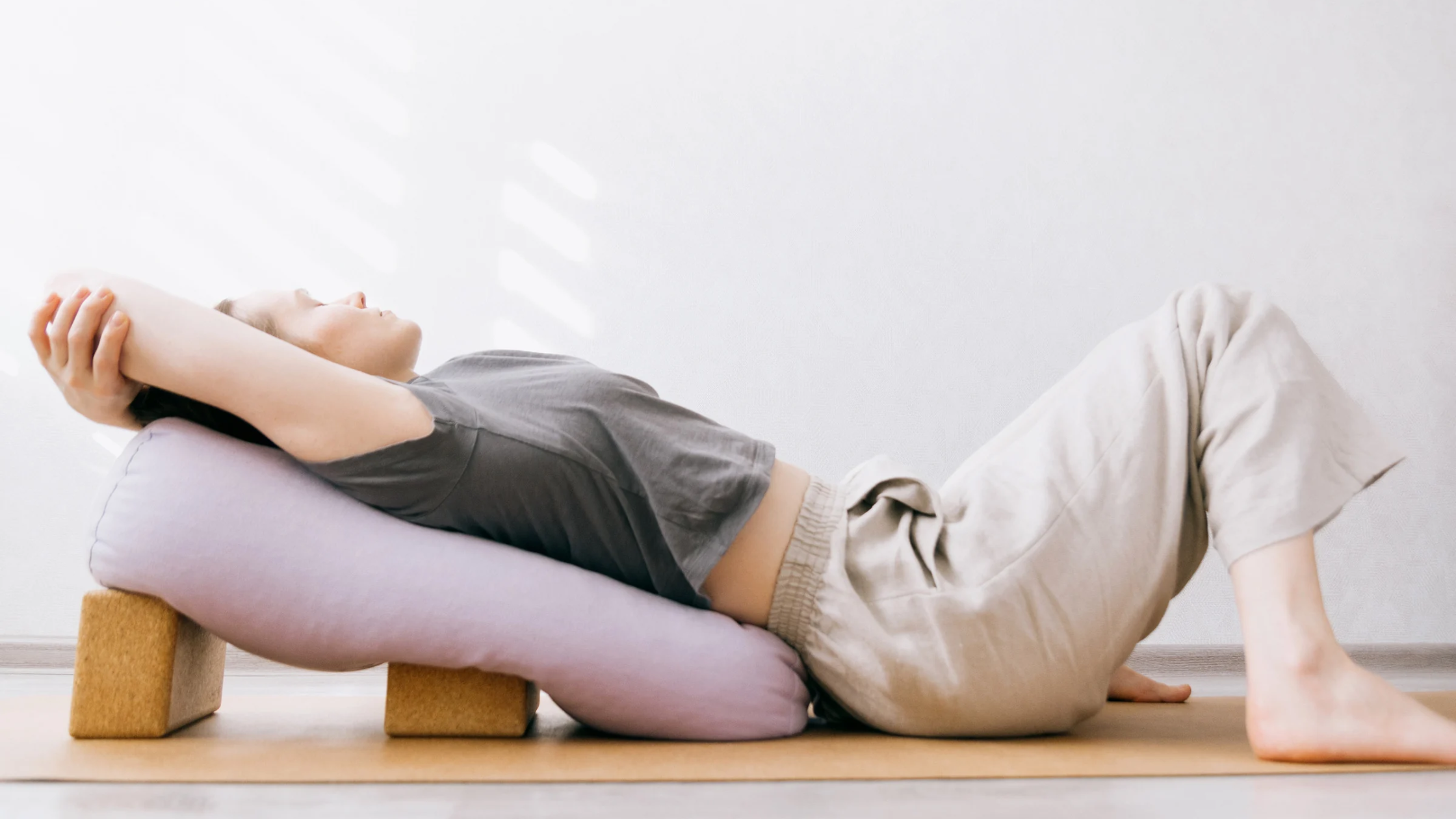
Thanks to our modern environments, increasingly more people are struggling with gut dysbiosis and inflammation. I am one of them. Despite my knowledge and daily practice of healthy eating and movement, I still suffer from what I call "gut distress" and many other aches and pains. Age and reality have a lot to do with it but, in my case, I know that stress is a significant contributing factor. While I understand cognitively how to manage stress, my drive and my nervous system do not always cooperate with my intentions.
Interestingly, I have noticed that when I'm practicing yoga regularly, my symptoms are markedly improved. My stomach is flatter, my aches and pains are reduced, and I am able to remain calm during situations that would normally get me riled. The difference is noticeable enough that it has made me curious about what's happening “under the hood.”
In my previous essay, Why Yin Yoga Feels Sooo Good, I explored some of the physiological reasons we feel nearly euphoric after a Yin Yoga practice. Those feel-good chemicals are good for the body. They definitely impact nervous system function. So, it stands to reason they might also be involved in reducing inflammation in the body.
What the Research Tells Us
The previously cited 2018 randomized controlled trial published in PLOS ONE demonstrated that practicing Yin Yoga for 5 weeks measurably reduced stress. Researchers found significant reductions in anxiety, sleep problems, and blood levels of adrenomedullin, a peptide associated with vascular regulation and physiological stress. While the study did not directly measure reductions in inflammation, it showed that a relatively gentle yoga practice can produce measurable physiological changes.
Even more interesting is a systematic review and meta-analysis examining 23 studies of mind-body movement therapies, including yoga, tai chi, qigong, and other practices. Researchers found that regular participation was associated with significant reductions in two important inflammatory markers, C-reactive protein (CRP) and TNF-alpha.
These findings suggest that the benefits may extend beyond any particular style of mind-body exercise. Practices that combine movement, attention, breathing, and relaxation may share physiological mechanisms that influence inflammatory processes.
The Body's Capacity to Regulate Itself
Research points to the likely involvement of our autonomic nervous system, which helps regulate everything from heart rate and digestion to our physiological response to stress. When we're under chronic stress, our bodies can remain in a heightened state of physiological arousal. Over time, this can influence immune activity, digestion, sleep, and inflammatory signaling. Practices that encourage relaxation and more balanced autonomic activity appear to disrupt that pattern.
This is where we might consider the role of physical intelligence (PQ) in mind-body practices. During Yoga, Qigong, Tai Chi and some forms of dance, participants practice noticing what's happening inside the body - tension, discomfort, breath, release, or subtle changes in sensation. Through objective curiosity, we become an observer, traveling within the body. Just noticing. Ultimately, accepting whatever it is that we notice.
This capacity of interoception is foundational to self-awareness and self-regulation. While research has not specifically established that interoception directly reduces inflammation, its connection to physiological regulation and immune function offers compelling evidence and warrants further study.
Study of One
Clearly, my own anecdotal experience with reduced discomfort doesn't prove that inflammation is decreasing. But the consistency of what I experience and regularly observe in my students has made me increasingly curious about these underlying mechanisms and what it can mean for improving human health.
As someone who has espoused the benefits of cardio and strength training for reducing risk for heart disease and other chronic illness for decades, I am now equally confident that we can achieve similar benefits without breaking a sweat.
I'm not suggesting that we abandon moderate-to-intense physical activity as part of our health guidance. I practice those things too. What I am saying, despite what we have been told, is that it is not the only path to wellness. This will come as good news to many exercise-averse individuals. The point is that we have another door through which to attain better health and longevity. One that, if we are being honest, was opened several thousand years ago in other parts of the world.
Yin for the Win
We often measure the benefits of exercise by how much we move, how high we get our heart rate, or how many calories we burn. Research into mind-body practices suggests that learning to slow down, pay attention, and regulate our physiological responses may contribute similar benefits to our health and with less physiological stress.
Sometimes doing less may help our bodies - and minds - function better.
Join the Movement
updates, activities, and info.