What Mind-Body Practices Can Teach Us About Helping Young Children Regulate Their Nervous Systems
Walk into almost any early childhood classroom and you'll see kids struggling to regulate their emotions and behavior. Some are restless, impulsive, or unable to sit still. Others become overwhelmed, withdraw, or react intensely to seemingly minor disturbances. Teachers are doing their best to manage these behaviors while meeting the needs of an entire classroom, often with limited resources and support.
These behaviors are an expression of what's happening in the body, particularly as it relates to the central nervous system (CNS). A child who is overwhelmed, frightened, or physiologically overstimulated does not have the capacity to respond to instructions, manage frustration, or engage in learning the way we'd like.
My recent exploration of Yin Yoga has me questioning how we might apply what we're learning from adult mind-body practices to early childhood development. Could we teach these same skills during the earliest years of life, when the nervous system is developing at its most rapid rate?
The answer appears to be yes, although the techniques will look quite different for young children.
The Developing Nervous System
During early childhood, the brain is developing the networks involved in attention, emotional regulation, executive function, and stress responses. Young children are still learning to recognize their internal sensations, understand what those sensations mean, in order to manage their responses.
Mind-body practices offer a way to develop these capacities. Movement provides sensory and proprioceptive information about the body's position and activity. Breathing exercises create opportunities to notice and influence physiological arousal. Stillness and mindfulness encourage awareness of internal sensations, a capacity known as interoception.
What the Research Says
There is encouraging evidence that yoga, mindfulness, and movement-based interventions can improve emotional and behavioral regulation in young children.
A 2021 systematic review examined 16 studies involving yoga and mindfulness interventions for preschool children ages three to five. Thirteen reported improvements in at least one social-emotional outcome, including behavioral self-regulation, attention, or executive function. Programs lasting at least six weeks appeared particularly promising.
Another study examined an eight-week yoga intervention involving 154 prekindergarten and kindergarten children from economically disadvantaged communities. Researchers found improvements in a behavioral measure of self-regulation and reductions in teacher-reported behavioral difficulties. The program included breathing, physical postures, and awareness of bodily sensations.
A larger controlled study involving preschool children ages three to five examined a 32-week yoga and mindfulness program. Children participated in 20-minute sessions once a week. Compared with the historical control group, participating children demonstrated greater improvements in initiative, self-control, and overall protective factors associated with resilience.
Bringing Mind-Body Practices into Early Childhood
We cannot expect a three-year-old to sit quietly for five minutes. The underlying principles of Yoga, however, can be adapted into simple, developmentally appropriate experiences.
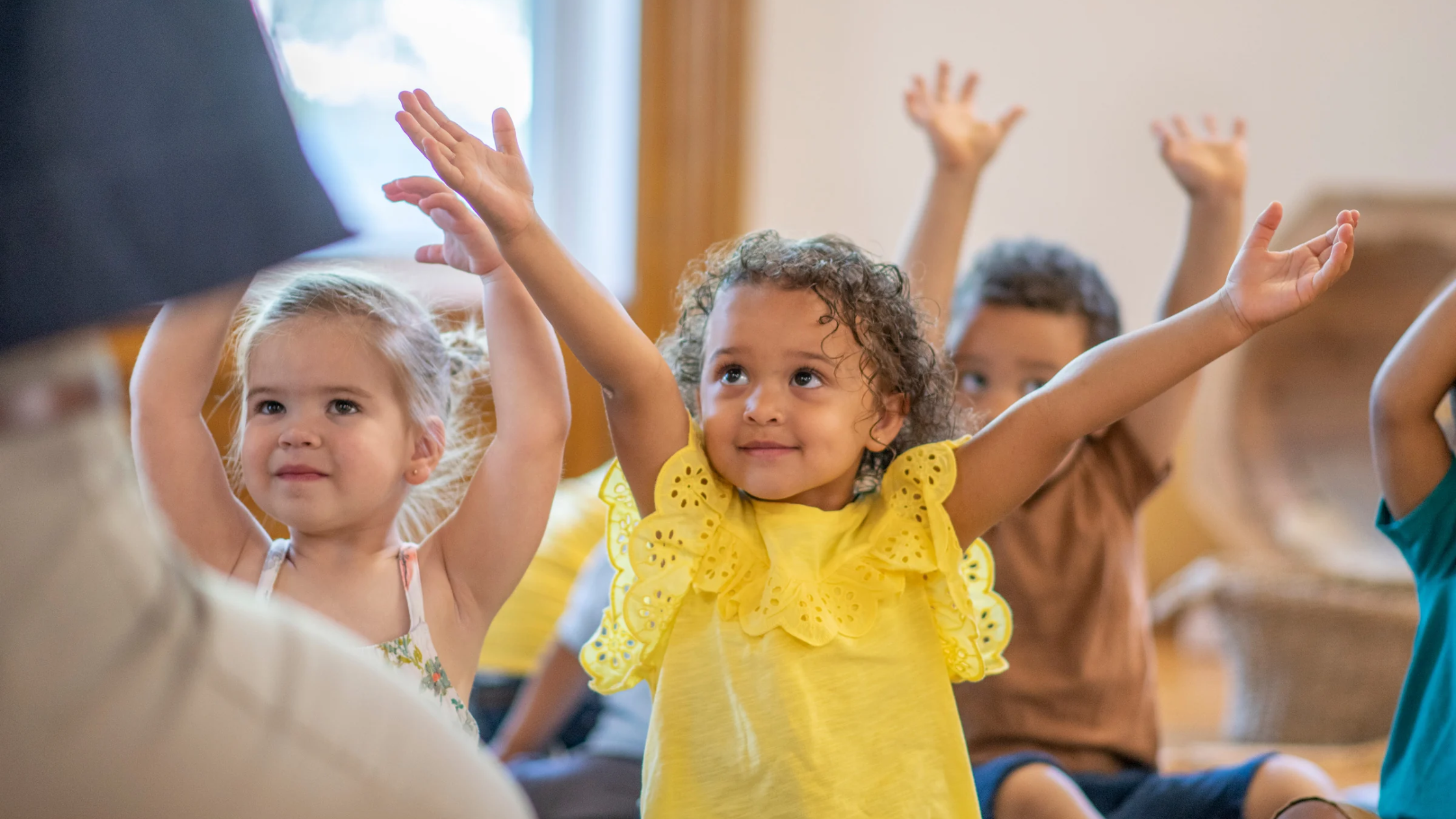
A classroom might begin the morning with a few minutes of playful stretching and belly breathing. Children could pretend to be trees swaying in the wind, cats stretching their backs, or butterflies resting with their wings open. Rather than instructing them to be still, teachers could invite them to notice how their bodies feel before and after moving.
When a child becomes frustrated, an adult might help them recognize their racing heartbeat, tight muscles, or faster breathing. Together, they could practice a comfortable stretch, a few slow breaths, or a gentle rocking movement.
Over time, these experiences can become part of everyday classroom routines. They might be especially useful during transitions, after active play, before rest periods, or when children are becoming overwhelmed.
For infants and toddlers, the approach would be even more relational. Responsive touch, rocking, rhythmic movement, and calm interactions can provide sensory experiences that support regulation. These practices should be responsive to each child's cues, not imposed as formal yoga exercises.
Bright Spots
Some programs are exploring how to bring these techniques into early childhood settings.
Project CaLM (Children Learning Mindfulness) integrated mindfulness strategies into everyday Head Start classroom routines. Teachers found the practices feasible and acceptable, although the pilot study was too small to demonstrate reliable improvements in children's well-being.
A particularly interesting experimental study involving 151 Head Start children compared yoga, creative movement, and usual classroom activities. Researchers reported lower salivary cortisol following both yoga and creative movement sessions compared with control sessions. These preliminary findings suggest that the physiological benefits of movement-based interventions deserve further investigation.
An Opportunity for Early Intervention
Based even on these early findings, one can imagine the potential impact of integrating these practices into early childhood education, home visiting, and developmental support programs. Rather than waiting until children demonstrate significant behavioral difficulties, we could introduce body-awareness and regulation activities as part of everyday learning.
For children already experiencing developmental delays, sensory processing differences, or emotional regulation challenges, interventions could be individualized with support from occupational therapists, early childhood specialists, and caregivers. The practices would complement, rather than replace, established developmental and therapeutic services.
We could also measure whether they're working. Along with observing classroom behavior, we could track children's ability to identify physical sensations, recover from frustration, transition between activities, and engage with peers. Where appropriate, researchers could examine physiological measures such as heart-rate variability to better understand the mechanisms involved.
It Starts in the Body
Much of our approach to early childhood development focuses on what children need to know and how we want them to behave. Yet their ability to learn, connect with others, and manage their behavior depends in large part on their developing nervous system.
This is the premise behind my interest in physical intelligence, or PQ. Sensory experiences, movement, physiological regulation, and emotional development are deeply interconnected. We have an opportunity to help children become familiar with their own bodies first so they can later demonstrate more sophisticated emotional and behavioral skills.
Adults may leave a Yin Yoga class feeling wonderfully calm, content, and restored. For children, the greater opportunity may be learning, from their earliest years, how to recognize what their bodies are telling them and develop the capacity – the agency - to respond.
References
Yoga and Mindfulness Interventions for Preschool-Aged Children in Educational Settings: A Systematic Review (2021).
A Yoga Intervention for Young Children: Self-Regulation and Emotion Regulation (2021).
Yoga and Mindfulness for Social-Emotional Development and Resilience in 3–5 Year-Old Children (2022).
Join the Movement
updates, activities, and info.