Movement & Mastery: Increasing Intrinsic Motivation
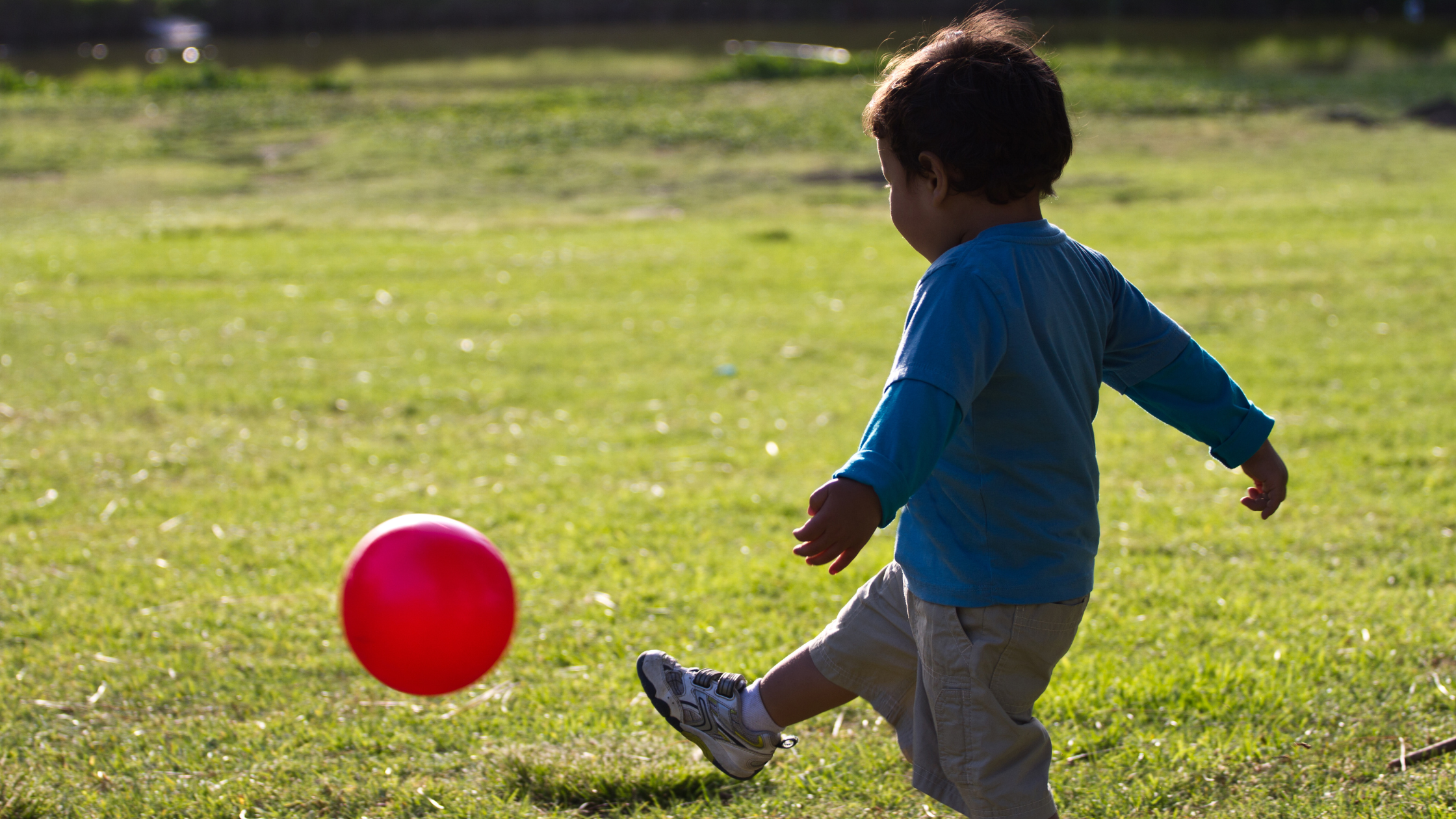
How we measure success matters.
In recent years we've become increasingly uncomfortable allowing children to struggle, fail, or come away empty-handed. With the best of intentions, we dole out participation trophies, constant praise, and rewards for every accomplishment. However, when praise is given regardless of the amount of effort or skill involved, it can do more harm than good. When every act is rewarded, no act is special. And, when we no longer associate a sense of internal achievement with a job well-done, it can erode intrinsic motivation over time.
The Source of Motivation
In her book, A Running Start, author Rae Pica notes that a life without intrinsic motivation, the sense of accomplishment that flows from within, means extrinsic rewards will provide the only motivation for doing something. Pica asks, “Why work hard at a project if there’s not a significant amount of money involved? Why run the race if you can’t be assured of a first-place ribbon?”
We’ve all seen these traits in others, and maybe even in ourselves. This isn’t a character flaw; it is simply what happens when we are deprived of opportunities to discover the satisfaction that comes from self-guided effort. When we engage in difficult tasks, pursue goals or push ourselves to the edge of our limits, we come to see what we are capable of. That feels good and is therefore self-reinforcing.
Goals & Rewards
This process involves setting an intention – a goal – and then making and executing a plan to achieve that goal. The goals can be big or small. What matters is accumulating enough meaningful “wins” to build self-confidence from the inside out. Over time, this helps us build our motivation muscles to keep trying new, hard things.
These experiences start very early in life. When a child reaches for a toy, there is reward in that. They see something they want. They plan how to get it. And they act. Yes – got it! We’ve all seen the excitement on a child’s face when they master a new skill. Toilet training, shoe tying, bike riding - all opportunities to strengthen a child’s intrinsic motivation. With each success, there is a rush of dopamine, one of the brain’s reward chemicals designed to reinforce future planning, effort, and goal-directed behavior.
The Role of Self-Agency
Rolling over, crawling, walking, jumping, and skipping are not just developmental milestones. These are skills a child accomplishes based on their own individual effort.
Many of our earliest experiences of mastery come through movement. There is something uniquely powerful about the brain and body working together to accomplish a goal. More importantly, this mental effort, combined with the firing of motor neurons, strengthens neural networks in the brain which correlate to later academic learning and achievement.
These early successes set the stage for self-agency, the belief that we are capable of doing difficult things and navigating our environment independently. Every time a child has an "I did that" moment, they are learning far more than the skill itself. They are building confidence in their own abilities in ways that will have far-reaching effects throughout their lives. Going to college. Getting a job. All the tough bits of adulting in the world rely on a healthy sense of self-agency.
How We Can Do Hard Things
Hardwired in humans for a purpose, this intrinsic reward system motivates us to do hard things, overcome challenges and persevere when it counts. These seem particularly important in society right now.
Maybe we should spend less time asking what we can do for children and more time asking what children can learn to do for themselves. Every opportunity to struggle, solve a problem, master a movement, or accomplish a difficult task becomes another opportunity to build confidence from the inside out.
As Thomas Edison once said, if we did all the things we are capable of, we would literally astound ourselves. Let’s help kids discover what they are capable of both now and in the future.
Thank you for your interest. Follow more of my work on Substack at The Tao te Mitchy, PQ Initiative, and Divergent Ideas.
For more on this topic, read Before We Teach Children to Read
Pica, R. (2006). A running start: How play, physical activity, and free time create a successful child. Da Capo Press.
Join the Movement
updates, activities, and info.